#199: The Strategic Memo
How to get your best ideas into the 2027 plan
When I first joined Unbounce to lead product marketing, I was hired to improve our product launches.
But a few months in, I realized we had no sense of who our best customers were. So I pitched a segmentation initiative. The results touched every team, and that one project changed how the C-suite and my cross-functional partners saw me. I credit most of my success at Unbounce to that single project.
That only happened because I packaged my insights into something leadership could say yes to.
As PMMs, we get exposed to soooo many insights. We spot opportunities our teams and companies should be working on all the time. And yet, more often than not, we get stuck working on whatever feels most urgent.
In my opinion, PMMs over-index on collecting insights and under-index on selling the “so what” and the “what next”. If you want your research to actually influence decisions, you need to present it effectively. That’s how you move from reactive to proactive.
Some people call this a business case. I call it a strategic memo. Either way, it’s a document that packages your idea into an opportunity that can get acted on.
And as you head into annual planning, it’s more important than ever.
Right now, your leadership teams are deciding what makes it onto the 2027 roadmap. If you don’t bring ideas to the table, someone else will. Creating one will help you show up with a clear point of view and a well-articulated idea.
In today’s edition, I’m sharing the structure I use for my strategic memos, so your best ideas get prioritized in the 2027 plan!
Let’s get into it.
The Strategic Memo
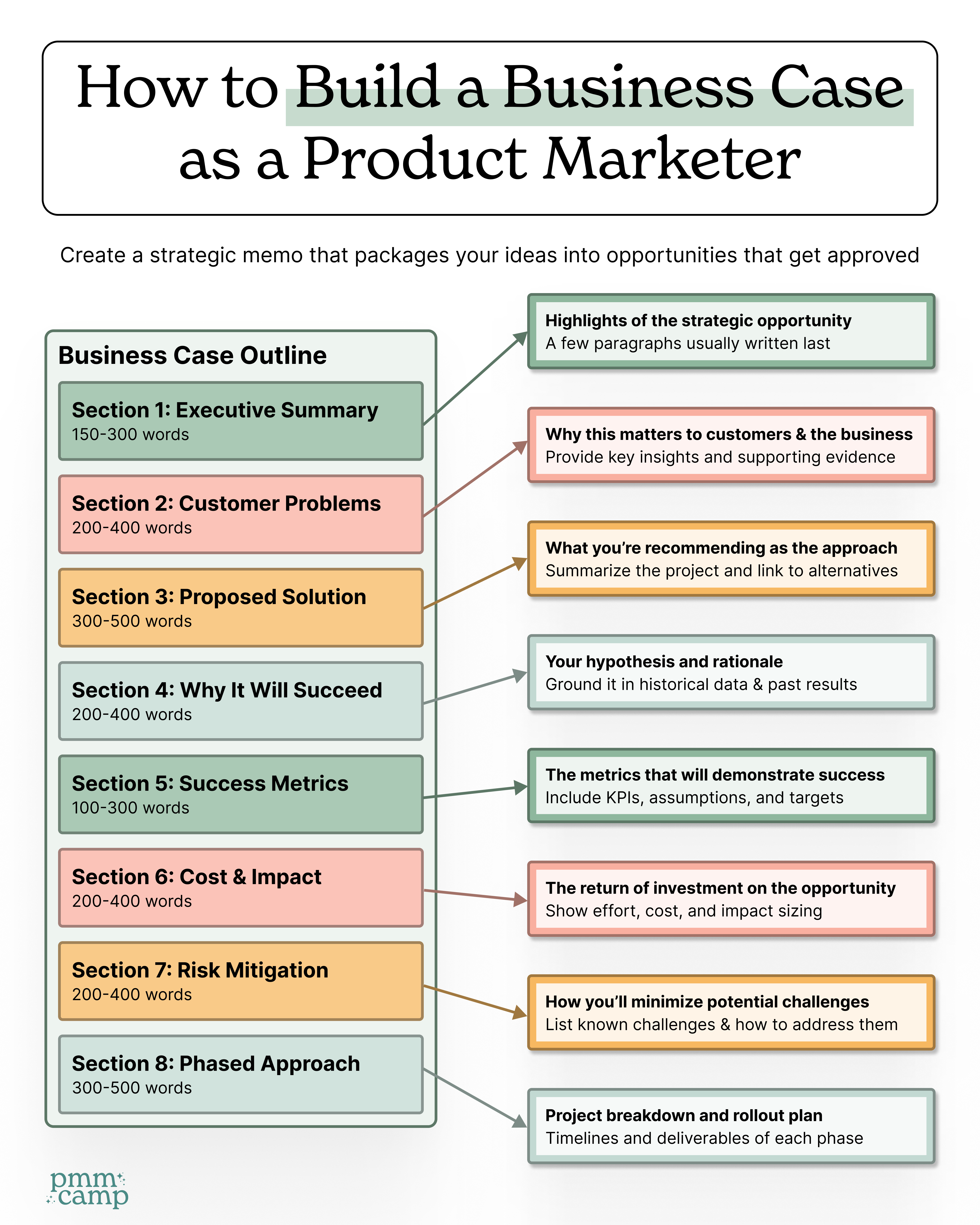
Here are the 8 sections I include in every memo.
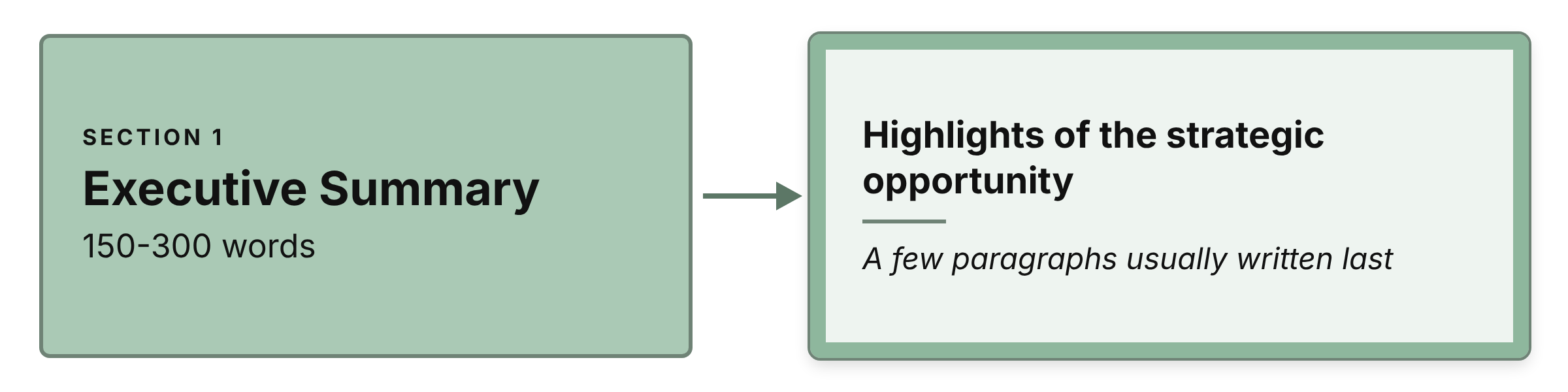
1. Executive Summary
This is the first thing leaders will read, so highlight the strategic opportunity and make it easy to scan. I usually recommend that you write this part last. It's hard to know exactly what belongs here until you've worked through every other section.
Your summary should cover the problem, your recommendation, the impact you expect, and what you're asking for. Be really clear and specific about that last one. Do you need budget, headcount, time, or simply a green light to move forward?
One test I like to use is to imagine a leader only reads this one paragraph. Would they have enough context to understand what you're proposing?
2. Customer Problems
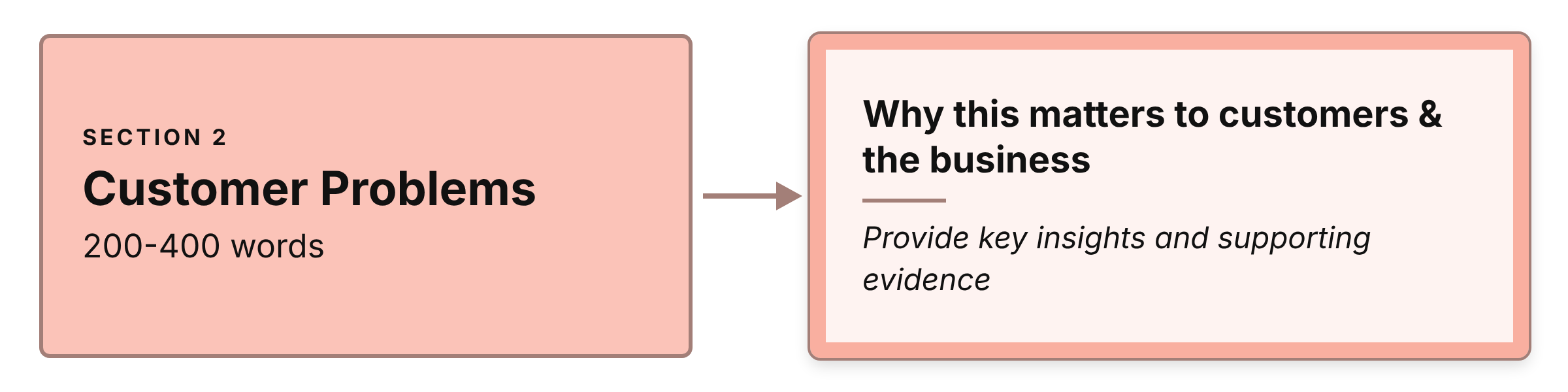
Next, you want to answer the question every leader will be asking: why does this matter to customers and to the business? Share your key insights and supporting evidence here.
Be careful not to build your whole case on a single data point. I've seen this so many times. Someone gets off a sales call and wants to change the entire roadmap because one prospect brought up a new feature request. That input might be interesting, but it might only be true for that one deal. You want proof it's happening across multiple customers.
So when you see something in one place, go verify it somewhere else. If you spotted a pattern in support tickets, see if it shows up in product usage or in your conversations with sales too.
From there, connect the problem to a real business stake, priority, or risk. You want to frame it through the lens of something the company already cares about. If you can't map it back to one, it's probably not important enough to surface right now, and you won't get the budget, resources, or support to address it.
3. Proposed Solution
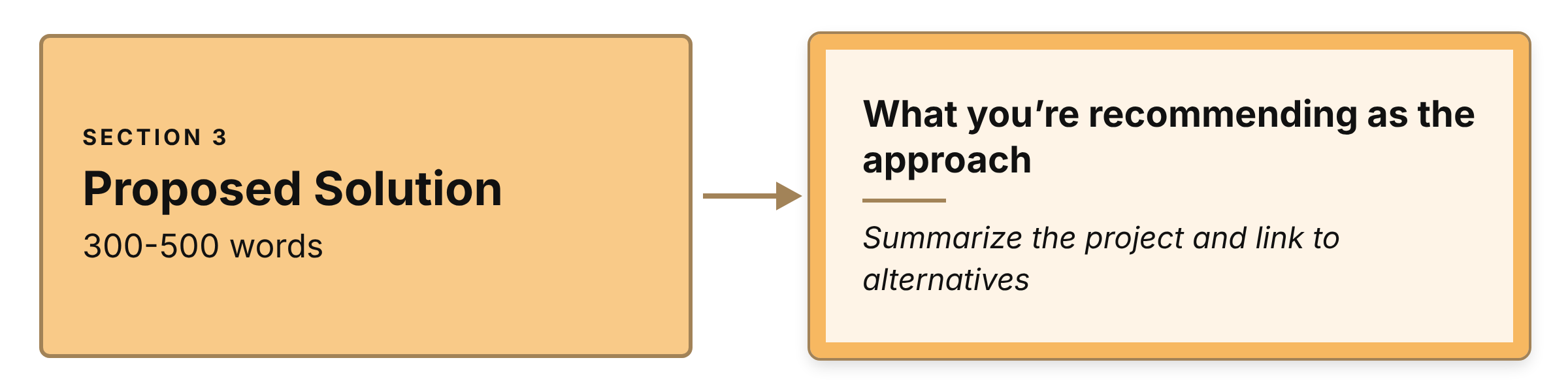
Once you've defined the problem, it's time to share your recommended path forward. Summarize the project and the approach you want to take.
Beforehand, make sure you've explored a few potential options. Go through the details of each one, including the effort, cost, and likely payoff, and then form a clear point of view on which is worth pursuing, and why.
In the memo itself, I only share the path I'm recommending. Putting every option into one document can be too overwhelming. But I always link out to the alternatives I considered, so people can follow my thinking. If a leader wants to dig into the other options, you can always set up a separate conversation.
4. Why It Will Succeed
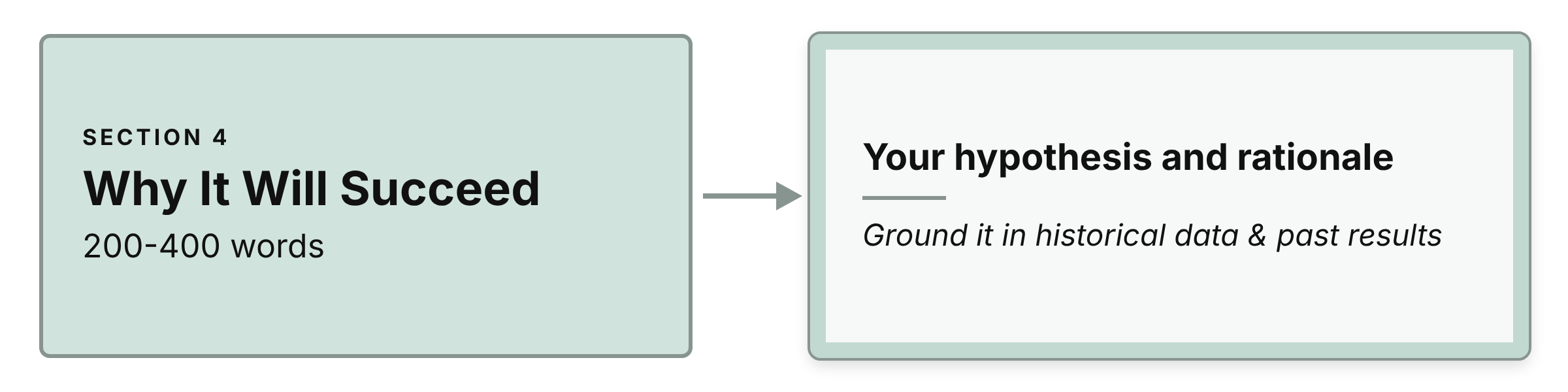
This is where you convince leadership the bet is worth making. Share your hypothesis and rationale. Why are you confident about this approach? Ground it in historical data and past results wherever you can.
This might mean looking at how similar initiatives have performed at your company before, or getting outside benchmarks from research reports or surveys.
Essentially, why do you believe in this?
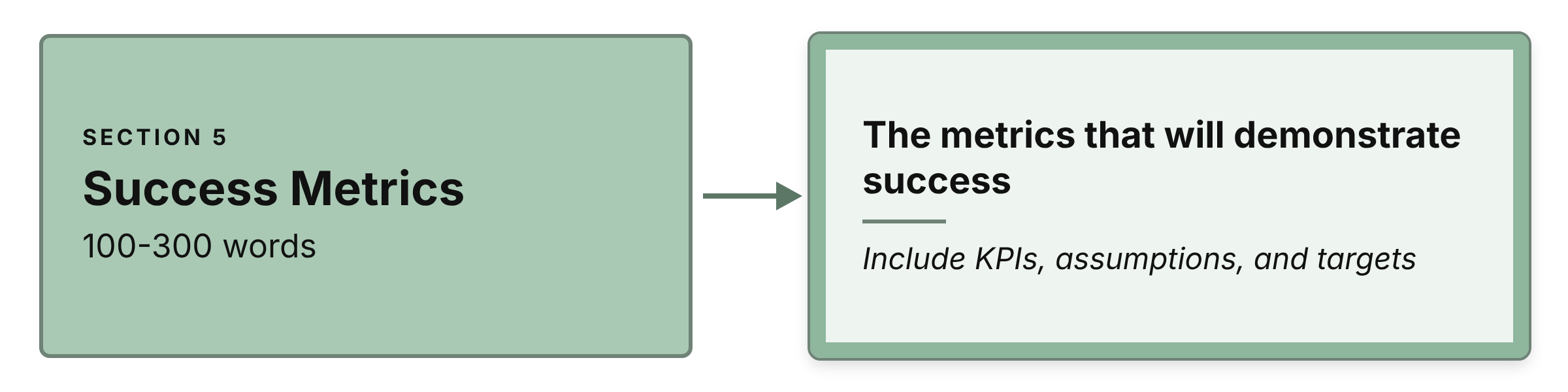
5. Success Metrics
Once leaders are convinced, show them how you’ll measure success. Think of this as the scoreboard you’ll build out for the project if it gets approved. Which metrics will you track?
The more specific you can be, the better. Your metrics should be trackable and tied to a timeframe. For example, "feature adoption" is not good enough. "Percentage of target segment who used the feature at least once within 30 days of launch" is. The timeframe matters here because it manages expectations and gives you an end point to analyze and iterate.
6. Cost & Impact
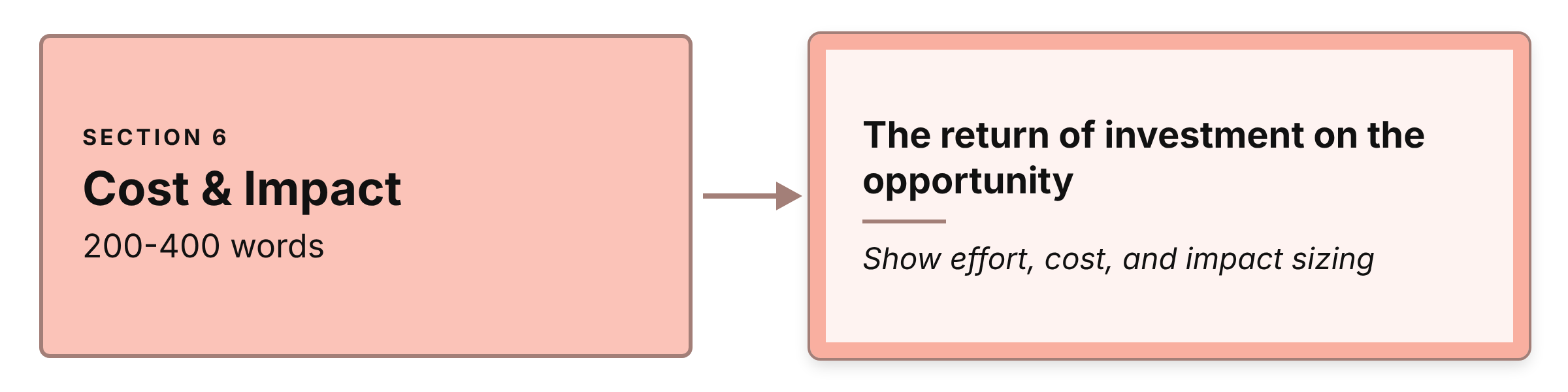
This is where you answer the big question of whether this is worth doing. What's the expected return on investment?
I like to start by sizing the opportunity with a quick back-of-napkin. Who or what does it affect, whether that's a share of customers, prospects, segments, or revenue?
You probably won't have perfect data, and that's okay. When I worked at FreshBooks, I had a CMO who called this a SWAG (a sophisticated wild-ass guess). And that's exactly what it is at this stage. What’s important is that you’re clear about where each assumption comes from so leaders can follow your reasoning.
Then pull it into an impact assessment that connects back to a number the company cares about. Spell out what changes for the business if you move forward.
7. Risk Mitigation
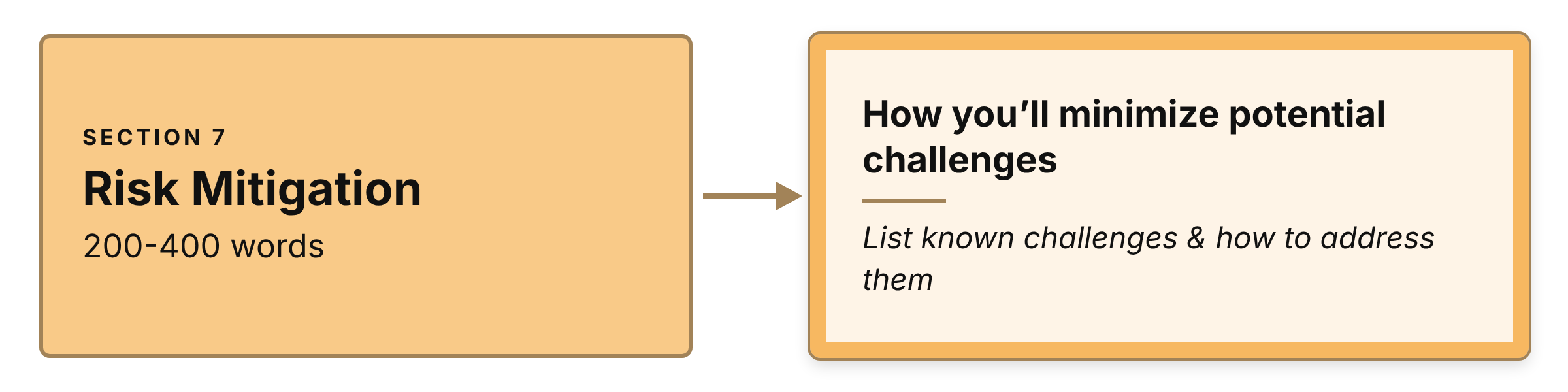
How will you minimize potential challenges? List any known challenges you've considered and how you plan to proactively address them.
This is the section people often skip. But every good idea still has risks. The more honest you can be about these upfront, the more you show that you really understand the business and can consider it from all angles.
And if risk doesn't feel like the right word, call them trade-offs. That’s a helpful framing too.
8. Phased Approach
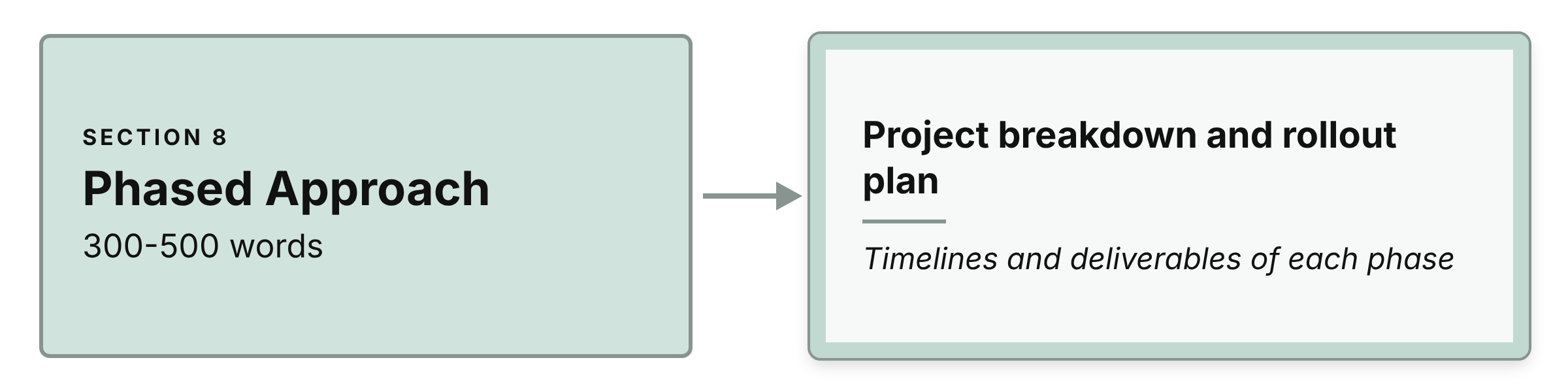
Finally, break down each phase of the project, including timelines, deliverables, and planned experiments.
A phased plan makes it much easier to get buy-in. Starting with a smaller first phase lets you validate the idea before asking for a bigger investment. For each phase, share what you'll deliver, what you expect to learn, and how that learning will shape what comes next.
Your strategic memo doesn't need to be a multi-page document, and it doesn't need to take weeks to put together. But the act of sitting down to structure your thinking is worth it, I promise. If you can't articulate the opportunity clearly on paper, you probably aren't ready to pitch it yet.
If you're sitting on an insight you think should be acted on, consider building a strategic memo. And if you have an idea that was shot down in the past, it might be time to repackage it and pitch again!
P.S. Here’s the full structure pulled together into one infographic, so you can save it for your next pitch.
CAMPER ESSENTIALS
RSVP for the AI PM + PMM Leader Summit. AI has made it possible to ship faster than ever, and marketing is racing to keep up. So Ramli John and I are bringing PMs and PMMs together for a free, virtual summit on November 17. You'll hear from product and marketing leaders on both sides of this equation, sharing how high-performing teams are closing the gap between shipping and storytelling. Register for free.
Cohort 3 of the PMM Leadership Bootcamp is open. Over six live sessions, you'll learn what great PMM leadership looks like, identify where you stand today, and build a concrete plan to close the gap (plus put those strategic memo skills to use!). Class kicks off February 4. Save your seat now.