#198: 10 Questions to Find Your PMM Path
Not sure whether to become a manager or stay a senior IC? Start here.
Do you need to be a people manager to be a leader? It’s a question I get a lot.
In fact, a Camper sent me this exact DM the other day:
“Is people management still an important element for going up in leadership? How would you view an IC Director role vs. a people manager Director?”
It’s a fair question. For years, it felt like the only way up was through people management. If you wanted to keep growing and earning more, you needed a team.
But that’s all changing. My hot take is that leadership does not mean management.
You can keep growing as a leader on either path! They are both equally rewarding in their own ways. Which means the most important question you should be asking is which path is right for you.
So today, I’m sharing 10 questions to reflect on before you choose your next step. These questions will help you understand what gives you energy, what tradeoffs you’re willing to make, and what success might look like for you.
Let’s get into it.
Leadership Doesn't Mean Management
Earlier this year, I shared the results of a survey of 134 product marketing leaders. One of the questions I asked was how they'd know they've “made it” as a leader.
I was both surprised and not surprised to find that very few people said it was about a job title or team size. Being a leader wasn't about finally getting promoted to Director or managing a team. Across both aspiring and current leaders, success was defined by impact.
52% of respondents said that they'll know they've made it as a leader when they are trusted to set vision and strategy for the business.
For maybe the first time ever as a PMM function, we're being given a real choice. People management isn’t the only option if you want to “move up.” The senior IC and people manager paths can both lead to equal opportunity, and that's exciting. But it also puts more of the decision back on you.
It's more important than ever to think about which path you actually want to go down. Which one are you best suited for? Which one will bring you more energy? Which one will let you have the highest impact (as defined by you)?
The reality is that each path requires different tradeoffs. That doesn't mean you can't start down one path and change to the other. I've definitely seen leaders do both. But more often than not, one of these paths will resonate with you more than the other.
Thinking this through can feel challenging, because there isn't a clear framework for it. What I am certain of is that there are five leadership capabilities you need to build and master, regardless of which path you choose:
Strategist: Make sense of the bigger picture, spot patterns others miss, and steer PMM toward the problems that matter most.
Operator: Turn strategy into action by grounding PMM's work in business goals and making success easy for others to see.
Activator: Create the clarity, rhythm, and environment that help a team focus on what matters and consistently do their best work.
Connector: Make people a priority and consistently nurture the relationships that multiply what's possible.
Architect: Design your career with care and position your strengths deliberately as you shape the leader you're becoming.
How each capability shows up will be slightly different depending on the path you take.
To help you figure out which one is right for you, here are 10 questions to reflect on, grouped by capability. For each one, I'll share how it tends to look for a senior IC versus a people manager.
Strategist
As a senior IC, you shape direction through your expertise and point of view. As a people manager, you're responsible for setting direction for the whole PMM function.
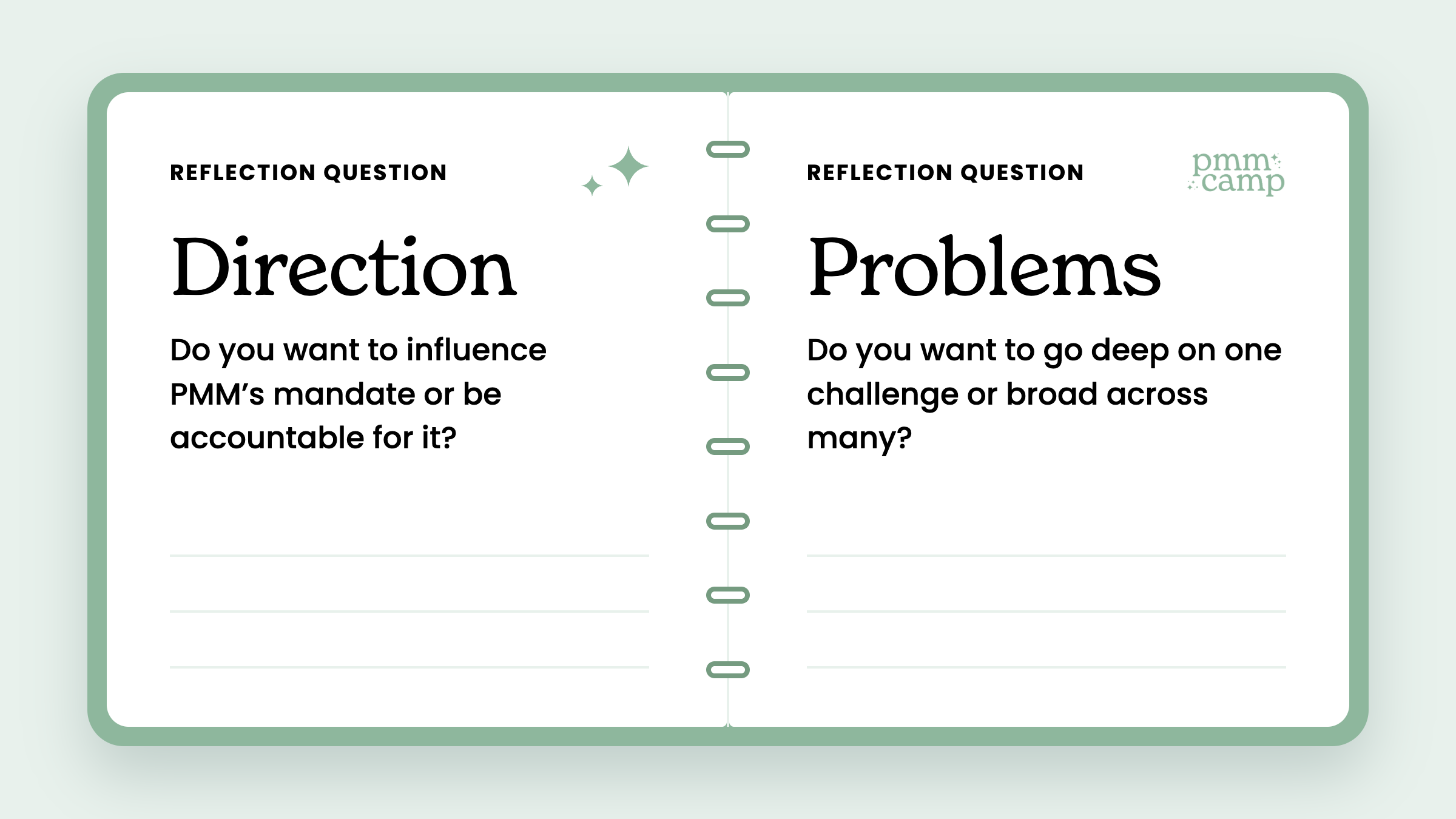
Direction
Q: Do you want to influence PMM's mandate or be accountable for it?
As a senior IC, your work and point of view shape how PMM's value is understood (and appreciated) across the business. As a people manager, you directly own the mandate. The clarity of your mandate determines the level of problems you're allowed to solve, and when it's unclear, you're the one who has to fix it.
Problems
Q: Do you want to go deep on one challenge or broad across many?
Senior ICs often get to go deep on a single high-impact problem, like positioning a new product or entering a market. People managers are responsible for every problem across the entire team, which means there’s less time to go deep on any one of them.
Operator
As a senior IC, you're accountable for delivering against clear objectives and showing the impact of your own work. As a people manager, you turn company goals into PMM objectives and show the impact of the team's work.
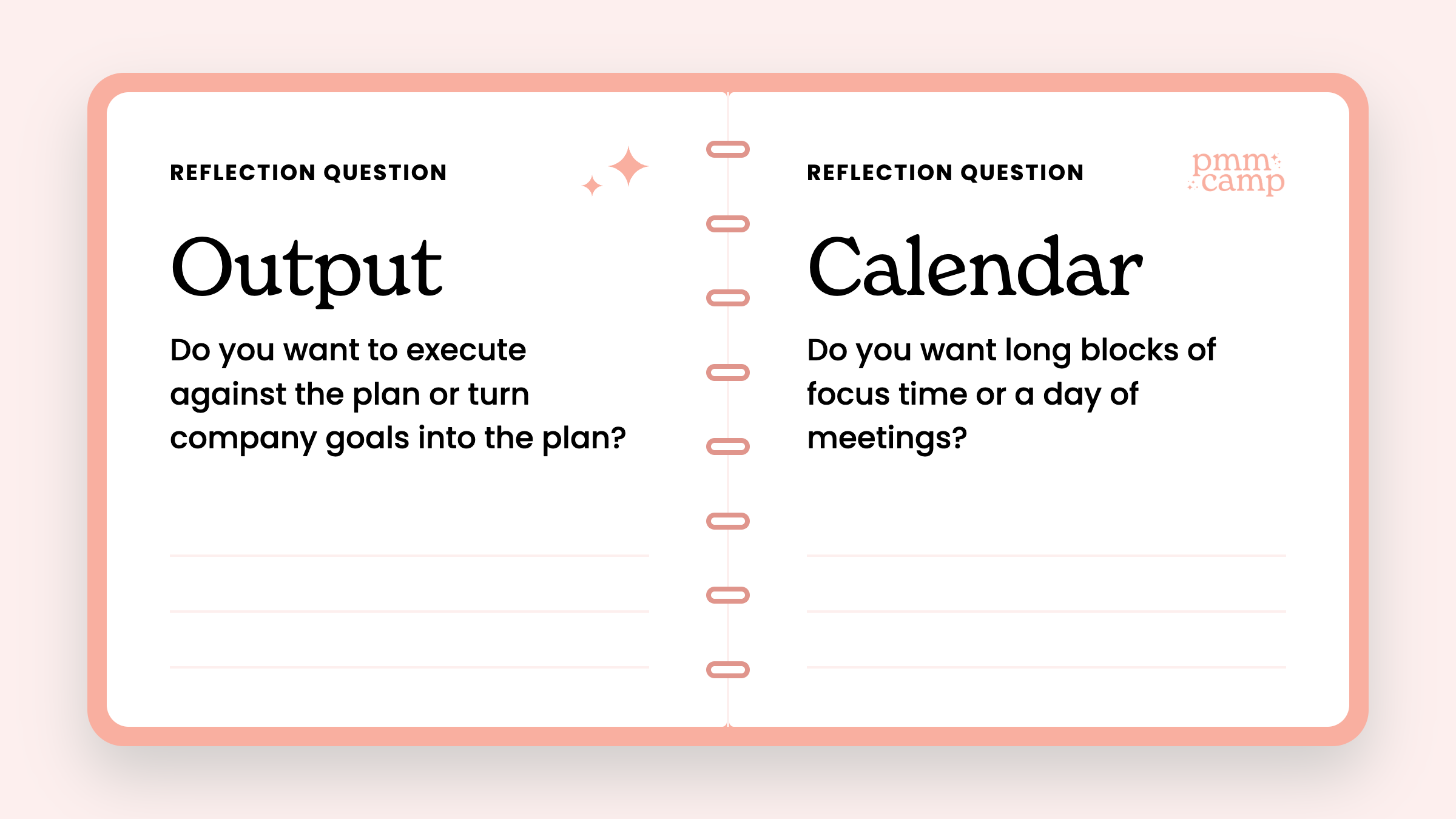
Output
Q: Do you want to execute against the plan or turn company goals into the plan?
Senior ICs take the plan and bring it to life, often owning the most important initiatives in it. People managers build the plan. They take the company's goals, decide what PMM will commit to, and set the metrics the team will be measured on.
Calendar
Q: Do you want long blocks of focus time or a day of meetings?
As a people manager, your calendar fills up with 1:1s, stakeholder meetings, and reviews. Senior ICs still have plenty of meetings, but it's easier to protect long stretches of time to think and do the deep work.
Activator
As a senior IC, you bring clarity and focus to the projects you lead so stakeholders understand what you’re doing, and why. As a people manager, you design how the team operates, from the roadmap to AI systems to who owns what.
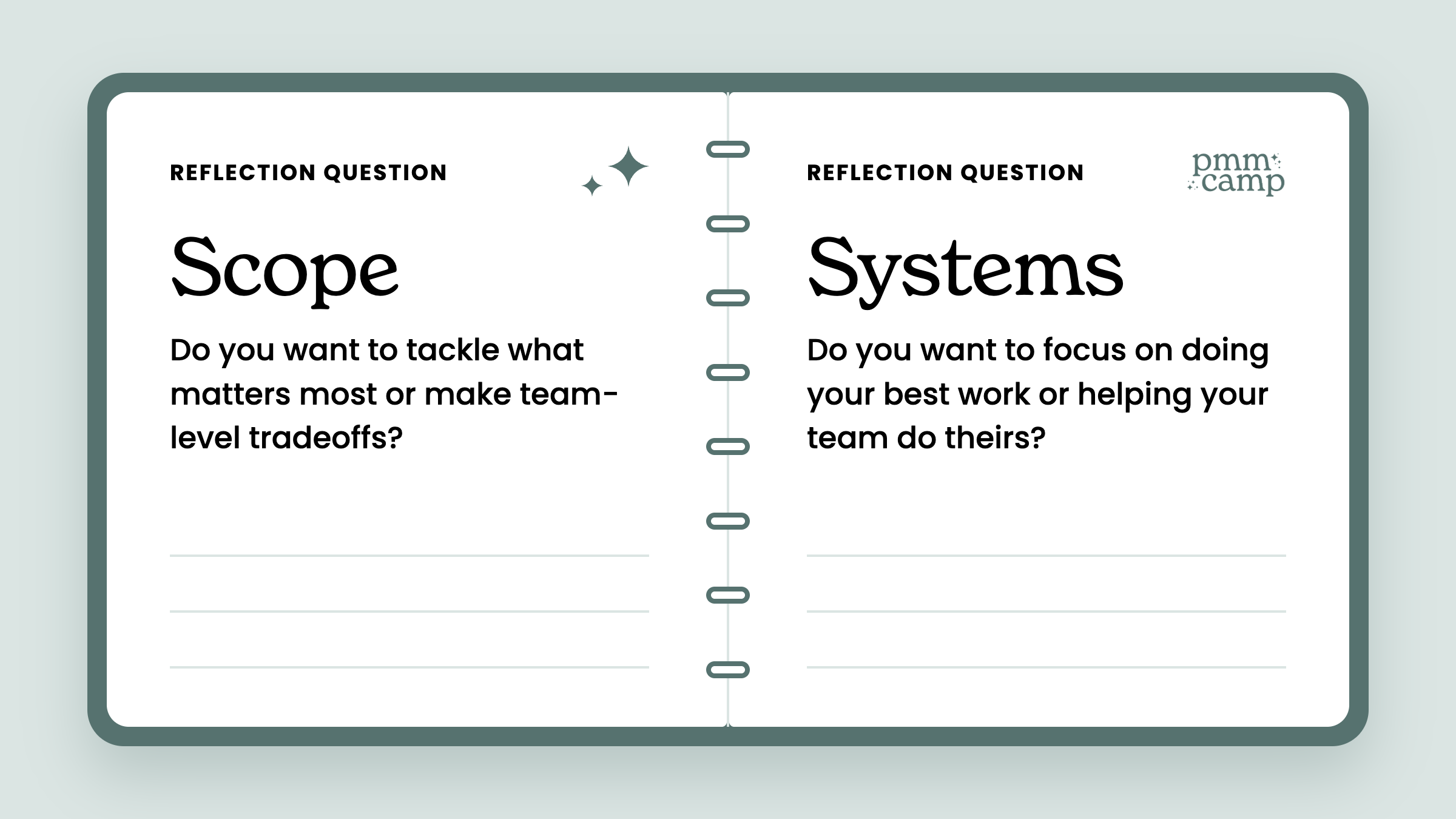
Scope
Q: Do you want to tackle what matters most or make team-level tradeoffs?
Senior ICs are usually focused on the highest-priority work. People managers decide what the highest-priority work is. That also means deciding what the team won't do and protecting their capacity.
Systems
Q: Do you want to focus on doing your best work or helping your team do theirs?
Senior ICs are measured on the quality of their own work. People managers are measured on the quality of the team's work, which means building the structure and environment that help each person thrive.
Connector
Both paths require you to make people a priority. As a senior IC, your relationships help move your own work forward and build trust in your expertise. As a people manager, your relationships also need to create opportunities for your team, like getting their work seen and opening doors for them.
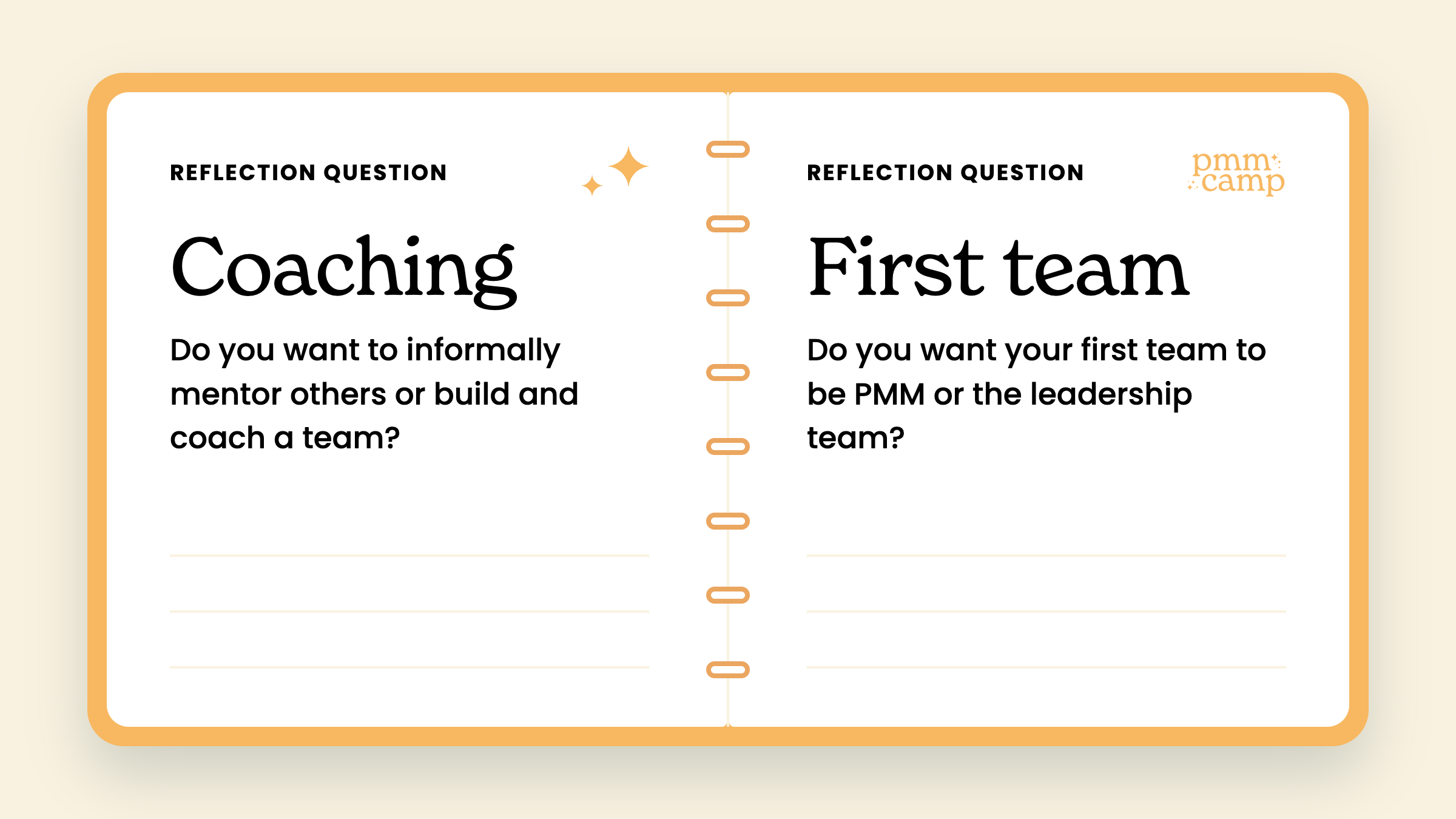
Coaching
Q: Do you want to informally mentor others or build and coach a team?
Senior ICs often mentor others informally by pairing on key projects. People managers are responsible for their team's growth. That means hiring, giving feedback, having career conversations, and coaching people through challenges.
First team
Q: Do you want your first team to be PMM or the leadership team?
The idea of a “first team” comes from Patrick Lencioni. Your first team is the group of peers you share goals and accountability with. As a people manager, especially as you move into more senior roles, your first team becomes the leadership team. The PMMs who report to you are still a priority, and part of your job is representing them well. As a senior IC, your first team is usually the PMM team itself and the cross-functional partners you work with every day.
Architect
Both paths require you to design your career with intention. But this is where tradeoffs between them really show up. What do you want to be known for? And which skills do you want to keep developing? As a senior IC, you'll keep sharpening your craft and deepening your expertise. As a people manager, you'll build a new set of skills, like hiring, coaching, and leading through others.
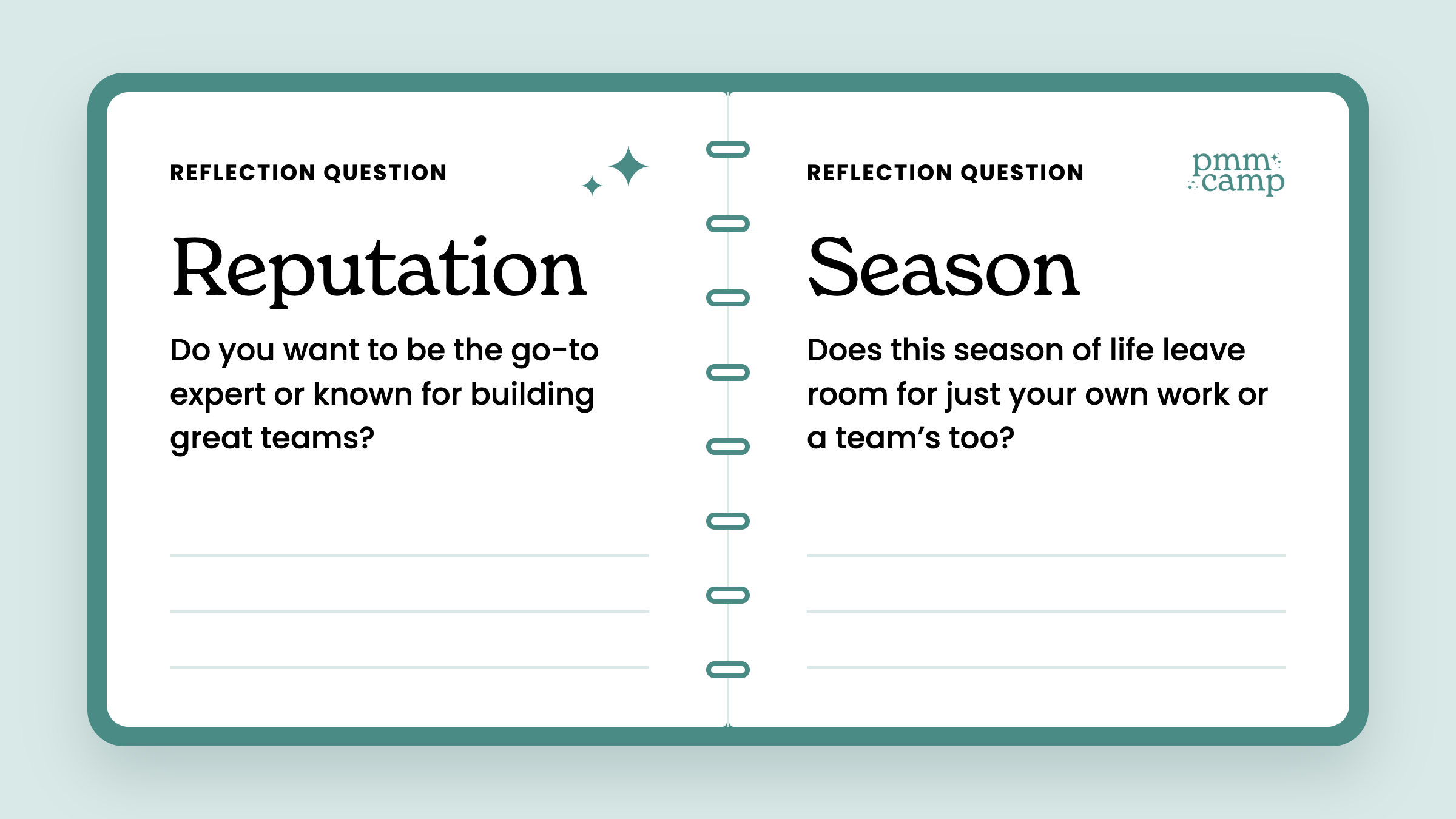
Reputation
Q: Do you want to be the go-to expert or be known for building great teams?
Think about what you want people to say about you a few years from now. Senior ICs build a reputation as the go-to expert in their company, and often in the industry. People managers build a reputation for the teams they've built and the people they've developed.
Season
Q: Does this season of life leave room for just your own work or a team's too?
Being a people manager often comes with a heaviness and a level of responsibility that can weigh on you. Depending on the season of life you're in, you may or may not have the space or energy for that. The good news is seasons change! This is why you'll see leaders move back and forth between management and IC roles over the course of their careers.
Choosing Your Path
I want to emphasize that there's no right or wrong path, and neither one is a one-way door.
If you do want to manage people, I think it's important to get some management experience early enough in your career to keep that door open for you. But if you try it and realize it isn't for you, or it isn't for you in this season of life, it's just as great to go back to an IC role.
For me, one of the reasons I went out on my own is that I love the craft of product marketing so much. I wanted to stay in the work, and being a consultant allows me to do that. But I also love building a team, and could definitely see myself doing that again one day (maybe even here at PMM Camp).
If you're struggling to figure out what you want next for your career, I'd encourage you to block off an hour in your calendar. Go through these 10 questions, and see what patterns and ideas emerge. It’s a great time of year to reflect on where you’re headed, and if it’s the right direction.
CAMPER ESSENTIALS
See where your leadership strengths are today. Take the free PMM Leadership Assessment to find out which capabilities come most naturally to you and which ones to focus on next, whichever path you choose. It's only 30 questions long.
Want to learn the famous Fletch positioning process? I’ll be joining their November cohort to put it into practice myself. The cohort runs November 9 to 13.
Go deeper on the two career tracks. Read my past edition, Your PMM Career Matrix, to see how I structured the IC and management paths when I was leading the PMM team at Unbounce.
Revisit the rise of the Super IC. Read The New Super IC for more on why the senior IC path is opening up for PMMs.